Welcome back to Behind The Scenes Saturday!! For the 3rd BTS post for Spooky Season, I chose to pay tribute to one of the most iconic horror movies to ever exist, The Omen! The Omen brought fear, paranoia, and suspense to many generations and truly withstood the test of time. So, watch out for the mark, beware of any nannies named Mrs. Baylock, and enjoy these fun pictures and bits of trivia!!
(Trivia provided by IMDb.com)
(Pictures provided by google.com and IMDb.com)
(SPOILER ALERT!!!)

- In order to find the perfect Damien, the film’s director, Richard Donner had all the boys auditioning actually attack him, like in the film’s church scene where Damien attacks Katherine (Lee Remick). When it was Harvey Stephens’ turn to audition, he really went all out. He screamed and clawed at Donner’s face, and even kicked him in the groin. After finally getting Stephens off of him, Donner ordered that his hair be dyed black and immediately cast him.
- Gregory Peck (Robert Thorn) took the role at a huge salary cut in favor of earning 10% of the film’s box office gross. The film earned more than $60 million in the U.S. alone, which resulted in it becoming the highest paid performance of Peck’s career.
- Guglielmo Spoletini (Italian Taxi Driver) was the son of a Mafioso in real life and he was very keen on getting into the movies. In one scene, you might notice a large bandage on his middle finger. This was because Gregory Peck accidentally slammed a car door on his hand, nearly taking off his finger.
- Mrs. Baylock was originally written as a warm and effusive Irish nanny. When Billie Whitelaw auditioned for the role, she changed the dialogue and brought a more cold and slightly sinister demeanor to her performance, ultimately winning her the role.
- Because the film was centered around a man who lost his son, production was hesitant to send the script to Gregory Peck since his son, Jonathan tragically committed suicide. To everyone’s surprise, Peck ended up accepting the part due to the grief he felt for not being there for him.
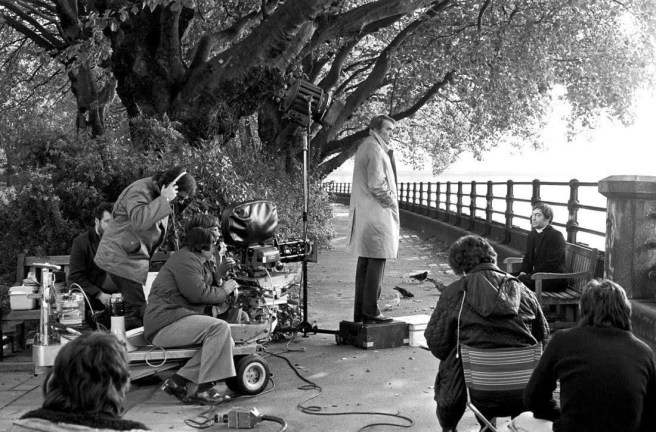
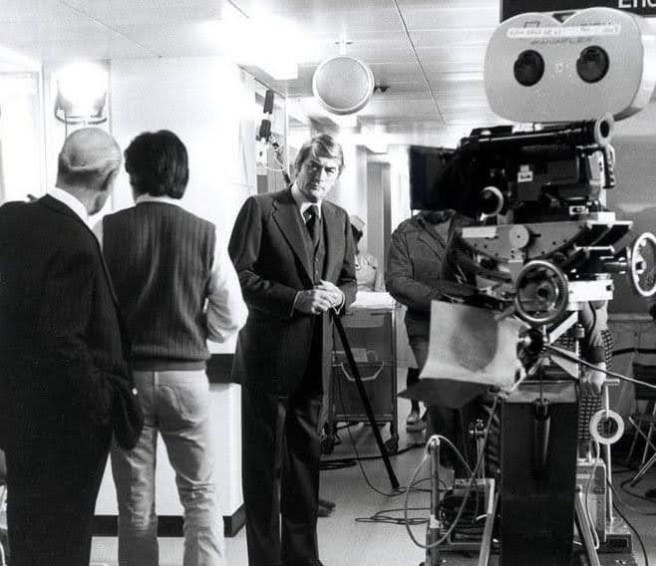
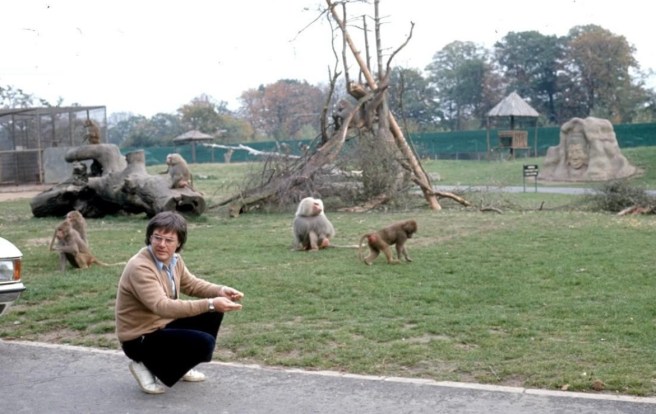
- The biggest issue with shooting scenes with Mrs. Baylock’s menacing dog isn’t what you might think. The truth is the dog was nothing like he was supposed to be in the film. He wanted to lick and play with the cast rather than appear threatening.
- Richard Donner refused to kill real goldfish for the sake of the movie, so for the broken fishbowl scene, already dead sardines were painted orange.
- The composer for the film, Jerry Goldsmith didn’t want to attend the Academy Awards that year because he lost multiple times before and he didn’t want to go through losing again. Richard Donner convinced him to attend, telling him he was going to win without a doubt. Goldsmith was so nervous during the ceremony, that he was smoking two cigarettes at a time. Goldsmith ended up winning his only Oscar with this film.
- The producers and Richard Donner debated on whether or not to remove the character, Mrs. Baylock from the film. They wanted audiences to not know whether supernatural forces were at hand or all the events were a freakish coincidence, and they felt that her sinister presence ruined the ambiguity of the film. Donner loved Billie Whitelaw in the film so much, that he couldn’t bear to cut her character.
- During filming, David Warner (Keith Jennings) was suffering from psoriasis so badly, that Gregory Peck actually paid for him to fly to Switzerland for treatment.


- Because Harvey Stephens was so young, Richard Donner felt the best way to direct him was to provoke genuine reactions from the child. In order to get Stephens’ peeved facial expression for the church attack, Donner shouted to Stephens from behind the camera, “What are you looking at, you little bugger? I’ll clobber you!”
- The site used for the Megiddo archeological dig was an actual dig site. It just wasn’t located in Megiddo. It was actually in the Old City of Jerusalem, on the southern end of the Temple Mount.
- The film was intentionally released on June 6, 1976 in order to coincide with the 666 symbol.
- After Alan Ladd Jr. joined the film as a producer, he was the one who insisted for Richard Donner to be brought on board to direct. Donner was mostly a TV director at the time, and he was ecstatic to jump on board to direct a major feature.
- Richard Donner and the film’s writer, Harvey Bernhard asked Alan Ladd Jr. for extra money in order for them to hire Jerry Goldsmith to compose the film’s score. After they watched him perform a live concert at the Hollywood Bowl, they felt that he’d be the perfect choice. They were given an extra $25,000 to hire him and Donner credited most of the film’s success to Goldsmith’s score, which increased the tension and fear of the film.


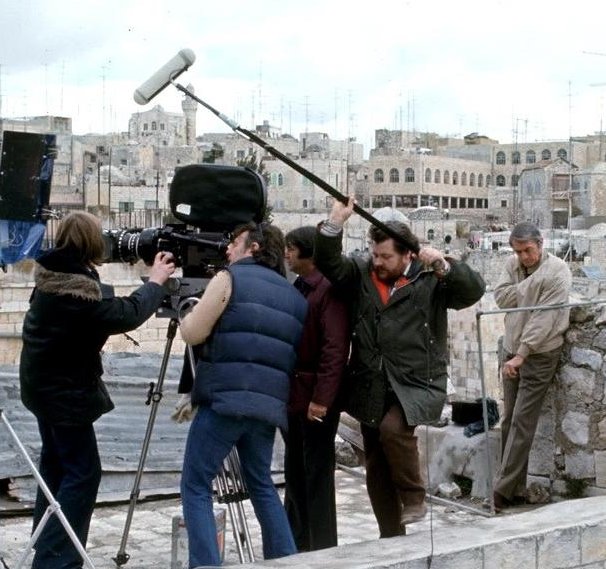
- This film is labeled among many other horror films as cursed. Many strange and awful things occurred during production. 1.) Gregory Peck and the film’s screenwriter, David Seltzer took separate planes to the UK to film, and BOTH planes got struck by lightning. 2.) Harvey Bernhard was almost struck by lightning while in Rome. 3.) Some of the Rottweilers hired for the film attacked their trainers unprovoked. 4.) A hotel that Richard Donner was staying at was bombed by the IRA, and he was also hit by a car. 5.) Gregory Peck cancelled a flight to Israel and the plane he was supposed to be on crashed, leaving no survivors. 6.) After creating the decapitation scene for this film, special effects artist, John Richardson got injured in an accident and witnessed the decapitation of his girlfriend/assistant, Liz Moore during production of A Bridge Too Far.
- The film was originally going to be called The Birthmark. While filming in the Italian maternity wards, signs were posted, saying Filming The Birthmark. The female patients complained, saying they didn’t want any mention of birthmarks in the maternity ward for fear of bad luck. The crew put up new signs saying Filming The Omen just as a temporary measure. Over time, the new name began to stick and it later became the official title.
- Gregory Peck objected to be filmed with a double chin, so a lot of his close-ups had to be reshot.
- David Seltzer had a friend whose child, Domlin was just obnoxious. Because of this kid, Seltzer almost named Damien “Domlin,” but his wife convinced him not to.
- Harvey Stephens’ hair was not only dyed black for the film, but he was also given contact lenses to darken his eyes.


- Dick Van Dyke, Charlton Heston, Roy Scheider, and William Holden were all offered the role of Robert Thorn. Dick Van Dyke later stated that turning it down was stupid.
- Before Harvey Stephens won the role of Damien, Richard Donner found the casting process for the demon child so difficult, that he seriously considered casting a little girl for the part.
- Billie Whitelaw didn’t like working with Harvey Stephens. She claimed he was always misbehaving on set, and she said, “he was just awful.”
- After this film was released, people were convinced that Damien was a biblical name and the Prophetic Passage was an actual quote.
- David Seltzer confirmed that he wrote this script purely for the money. He also admitted that he intentionally set it in London because he just wanted to go to England. He stated, “I did it strictly for the money. I was flat broke. I do find it horrifying how many people believe all this silliness.”


- Mike Hodges was approached to direct this film, but he turned it down. He later signed on to direct Damien: Omen II. After filming for 3 weeks, he was fired over creative differences.
- Mia Farrow played Mrs. Baylock in the 2006 remake. When talking about the original Mrs. Baylock, she praised Billie Whitelaw’s performance, but also stated, “It seems pretty ridiculous that someone would hire someone like that to be a nanny and live in your house!”
- Billie Whitelaw was performing in a play at the West End at the same time they were shooting this film. She tried to call and get out of making the film in favor of the play, but because it was late on a Friday afternoon and no one was at the production office to receive her call, she had no choice but to show up on Monday to do the film.
- The South African censor board passed this film for screening on the condition that all mention of the Devil, Satan, etc. be removed. Richard Donner publicly refused, saying that if they were Christians and believed in the Bible and the existence of God, they should not deny the existence of the Devil, too.
- This was the final film for Anthony Nicholls (Dr. Becker) and Betty McDowall (American Secretary).
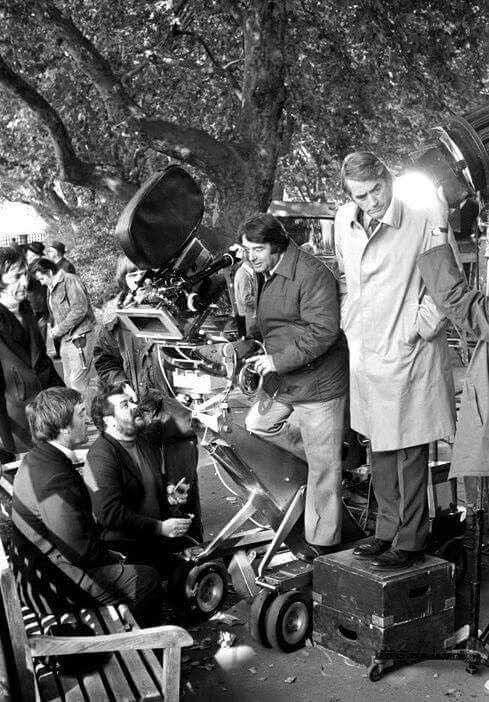

- Richard Donner convinced noted cinematographer, Gilbert Taylor to shoot this film. He wasn’t exactly retired at the time, but he turned his focus to dairy farming during a major slump in the British film industry, when finding work became more difficult.
- It took David Seltzer a year to write the whole script.
- Robert Rietty, who played a monk in the film, also provided the voices for quite a few characters, including a British police officer and the Italian cab driver.
- Because the audience usually closes their eyes, shielding them from horrific scenes, Richard Donner intentionally edited Keith’s decapitation in a way to where the audience would reopen their eyes, and his head would still be flying. 5 different cameras were used for the scene, to show it at all angles.
- David Warner kept his severed head for many years. When he got divorced, his ex-wife obtained custody of it.


- The original ending had Damien killed as well. Alan Ladd Jr. felt this was a mistake, claiming the Devil would be too impossible to kill. He willingly gave Richard Donner the necessary funds to shoot a more open ending to the film.
- In order to get the right final expression for the film, Richard Donner used reversed psychology on Harvey Stephens. Before shooting, he told Stephens, “Don’t you dare laugh. If you laugh, I won’t be your friend.” Of course, Stephens wanted to laugh, but he composed himself enough to just smile at the camera.
- In order to accomplish the scene where Katherine fell to the floor, a vertical wall representing the floor was built and Lee Remick was standing upright and she was dollied backwards towards it.
- Gregory Peck and Richard Donner really only had one argument during filming, and it was about Robert’s reaction after hearing his wife was dead. Gregory felt that Robert should’ve smashed and broken everything around him in a fit of rage. Donner felt it would be better to cut in on Robert well after he heard the news, not in the moment. They argued about it for a whole day before Peck said, “You’re wrong. I’m right, but you’re the director, and therefore I have to do it your way.” After reviewing the dailies, Peck admitted that Donner’s way was the correct way.
- During the cemetery dog attack scene, David Warner’s stunt double, Terry Walsh was severely injured and had to be hospitalized.


- Before working on this film, Richard Donner worked with Jack Palance on a TV movie called Bronk. When Palance heard that Donner’s next project was going to be in England, he urged Donner to seek out his daughter, Holly Palance, who was a great actress. Donner did just that and cast her as Damien’s first nanny who hangs herself… also named Holly.
- David Warner understandably refused to watch his decapitation scene.
- Richard Donner and the film’s editor, Stuart Baird felt that Robert and Mrs. Baylock’s final fight scene was excessive, so they trimmed it back a LOT.
- Because the filmmakers were careful not to show any actual bloodshed, they used the wine spilling in the shop during Keith’s decapitation scene to merely suggest blood.
- While Robert and Keith visit Bugenhagen (Leo McKern), you might notice that some sand falls from a doorway. This is subtle foreshadowing as Bugenhagen was later buried alive at Yigael’s Wall in the beginning of Damien: Omen II.

 Karli Ray's Blog