Welcome back to Behind The Scenes Saturday!!! I’ve paid tribute to many legendary horror characters so far. Today, I wanted to put the spotlight on Pinhead with a tribute to his first film, Hellraiser! With its strange plot and even stranger characters, Hellraiser provided a perfect combination of pleasure, pain, and horror. So, don’t solve the strange puzzle box, beware of all the hooks and chains, and enjoy these fun pictures and bits of trivia!!
(Trivia provided by IMDb.com)
(Pictures provided by IMDb.com, google.com, and facebook.com)
(NOTE: If some of these pictures are actually from the Hellraiser sequels, I do apologize, as I do get some of them mixed up.)
(SPOILER ALERT!!!)
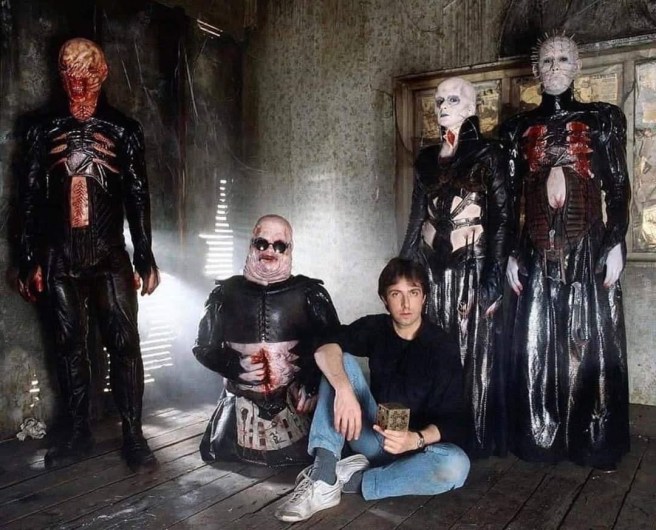
- During an interview, Doug Bradley (Hell Priest/Pinhead) described this universe’s Hell as a prison. The Cenobites were the prison guards, Hell Priest was the prison warden, the puzzle box was the key to the prison cell, and the demons were the escaped inmates.
- The film’s director, Clive Barker said that the writing of the script took place at the height of the A Nightmare On Elm Street, Friday The 13th, and Halloween film series. Because of this, his wish was for Hell Priest to be portrayed as an articulate and intelligent character, but it was initially not well received by the producers. Some suggested that he should act more like Freddy Krueger and crack jokes. Others suggested that he be a more silent character like Michael Myers or Jason Voorhees. Barker insisted that Hell Priest’s personality should be more akin to Christopher Lee’s portrayal of Count Dracula. When later talking about this decision, he stated, “Part of the chill of Dracula surely lies in the fact that he is very clearly and articulately aware of what he is doing. You feel that this is a penetrating intelligence and I don’t find dumb things terribly scary, I find intelligence scary, particularly twisted intelligence; it’s one of the reasons why Hannibal Lecter is scary, isn’t it? It’s because you always feel that he’s going to be three jumps ahead of you.”
- The Chatterer (Nicholas Vince) and Butterball (Simon Bamford) Cenobites originally had dialogue, just like the other Cenobites. However, this had to change because the makeup for both characters made coherent speech pretty much impossible. Their lines were given to the Female Cenobite (Grace Kirby) and Hell Priest. It’s said that the added dialogue cemented Hell Priest’s reputation as the film’s trademark character.
- Many viewers commented on the poor quality of the blue sparks and lightning at the end of the film. Clive Barker explained that, due to a very limited budget, there wasn’t enough money left to have professional FX done after principal photography. Barker himself and another person animated the scenes by hand over a single weekend. He later stated that he thinks the FX turned out pretty well considering how much alcohol the two consumed that weekend. The low budget and lack of extra money also explained why the film’s special effects designer, Bob Keen only had about £700 to make the final pterodactyl-esque demon.
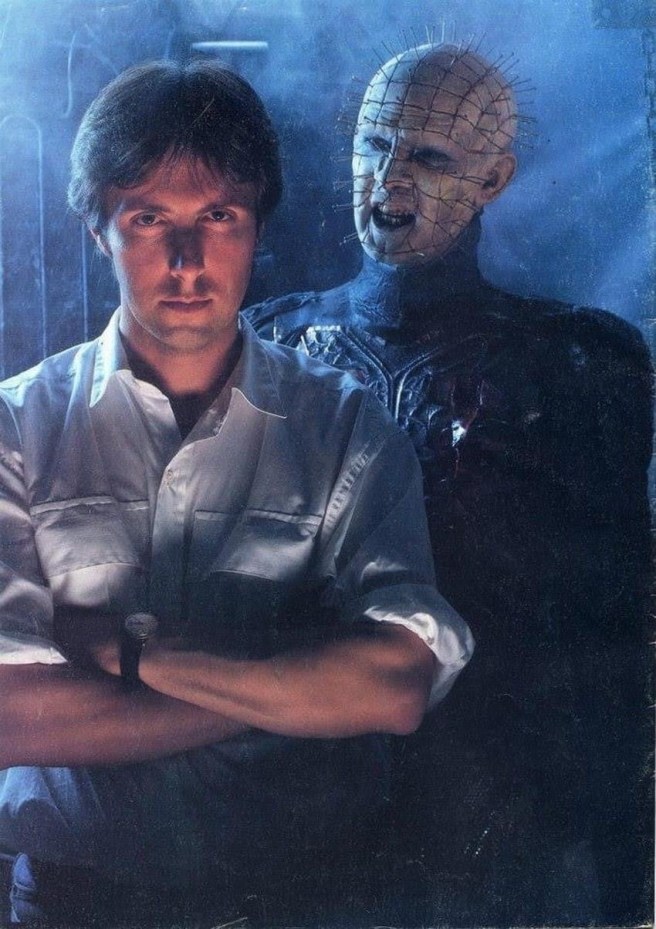
- When Clive Barker first showed the film to his mother, she cried tears of joy when she saw her son’s name in the opening credits. He then leaned over and whispered that it would be the happiest she would be for the next two hours.
- The film was originally going to be titled The Hellbound Heart, after Clive Barker’s novella that it was based on. The studio was worried that it sounded too much like a romance, so they asked him to change it. As a working title, Barker used Sadomasochists From Beyond The Grave, and that was later rejected for the overtly sexual content. Barker then contemplated just going with Hellbound, but it was considered too negative. He eventually opened the door to the production team and crew to come up with their own suggestions. One 60-year-old female crew member offered up the title, What A Woman Will Do For A Good F**k. It was the film’s producer, Christopher Figg who came up with the title, Hellraiser. Barker later got his wish somewhat granted when the sequel was titled, Hellbound: Hellraiser II.
- Clare Higgins (Julia) actually hates horror movies. When she attended the premiere of this film, she had to leave after 10 minutes because it freaked her out so much. Supposedly, she still has never seen the whole movie.
- Andrew Robinson (Larry) ad-libbed a lot of his dialogue for the film. One line he improvised was, “Enough of this cat and mouse s**t.” Frank’s (Sean Chapman) final words before being sent back to hell were supposed to be “F**k off” but Robinson convinced Clive Barker to replace it with, “Jesus wept.”
- Doug Bradley was given the choice to either play one of the mattress movers, or the lead Cenobite. He had an “actorly” conversation with himself and genuinely considered turning down the role of Hell Priest. He initially believed that, as a new film actor, the audience should see his face. He stated, “But it was a brief conversation. There was no doubt in my mind that this unnamed guy with the pins in his head had a certain je ne sais quoi that a mattress-delivery guy didn’t”.
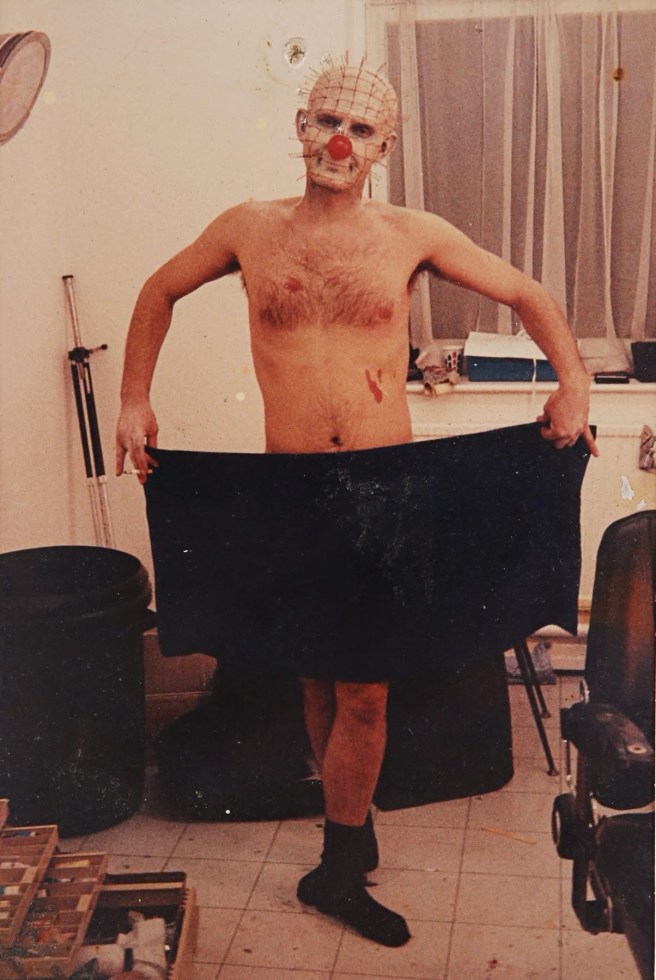
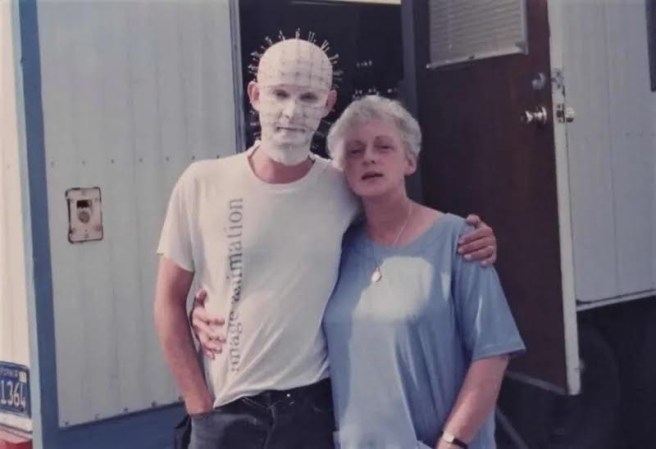
- Over time, Doug Bradley became skilled at the application and removal of the Hell Priest appliances and costume. In some of the Hellraiser films, he was even credited as an assistant makeup artist.
- In the beginning, it took about 6 hours to apply the Cenobite makeup on Doug Bradley. Over time, they were able to get it down to about 3-4 hours.
- To save on production costs, the studio tried to cast stunt men for the Cenobite roles. Clive Barker put his foot down and insisted on hiring actors, reasoning that even if the characters didn’t speak and appeared under heavy makeup, their body language would still convey a personality.
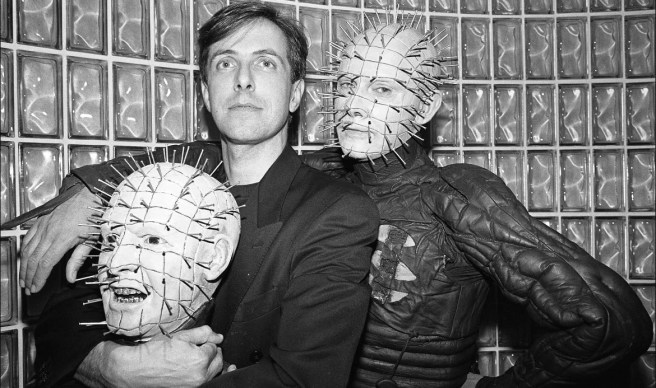
- Ashley Laurence (Kirsty) didn’t actually spend much time on set with the Cenobites. Instead, she acted mostly opposite a piece of masking tape. The scenes featuring the Cenobites were shot separately due to budget reasons. This is why Kirsty and the Cenobites are rarely in the same shot together.
- The name Pinhead originally started out as a nickname for Hell Priest, and it was later used in the sequels. Clive Barker didn’t like the name, as he felt it was undignified.
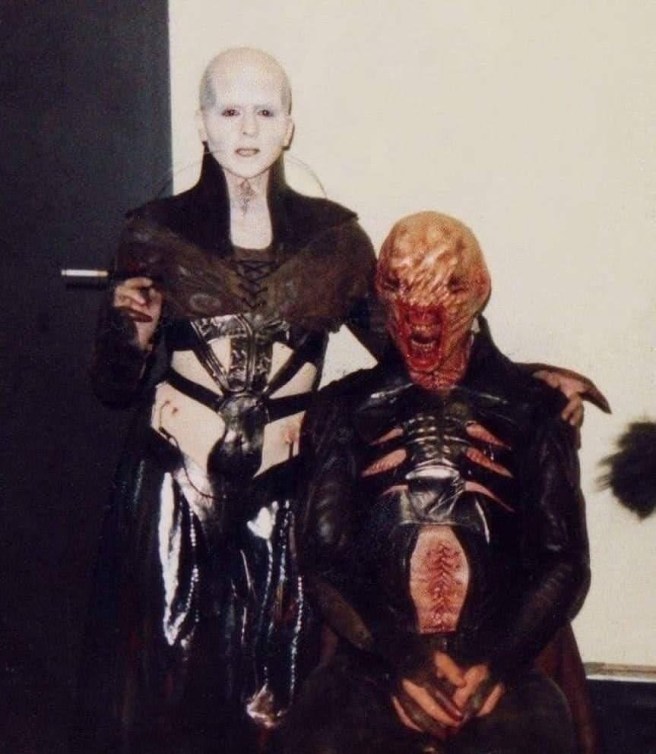
- On set, the Female Cenobite was given the name Deep Throat, but they felt it was too sexual, so they scrapped it and didn’t give her a new name. This is why she’s simply billed as Female Cenobite in this film and the sequel.
- During filming, Doug Bradley had difficulty hitting his marks. He couldn’t see through his black contact lenses and he was afraid of tripping over his skirts.
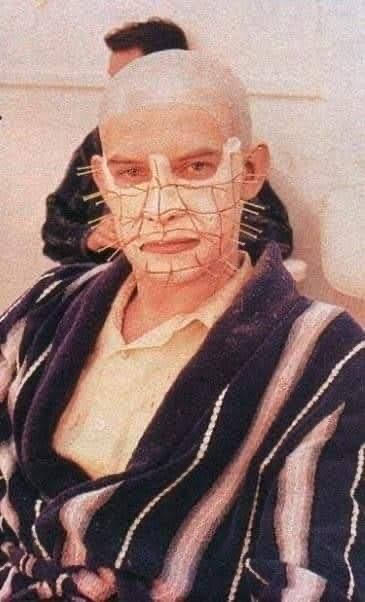
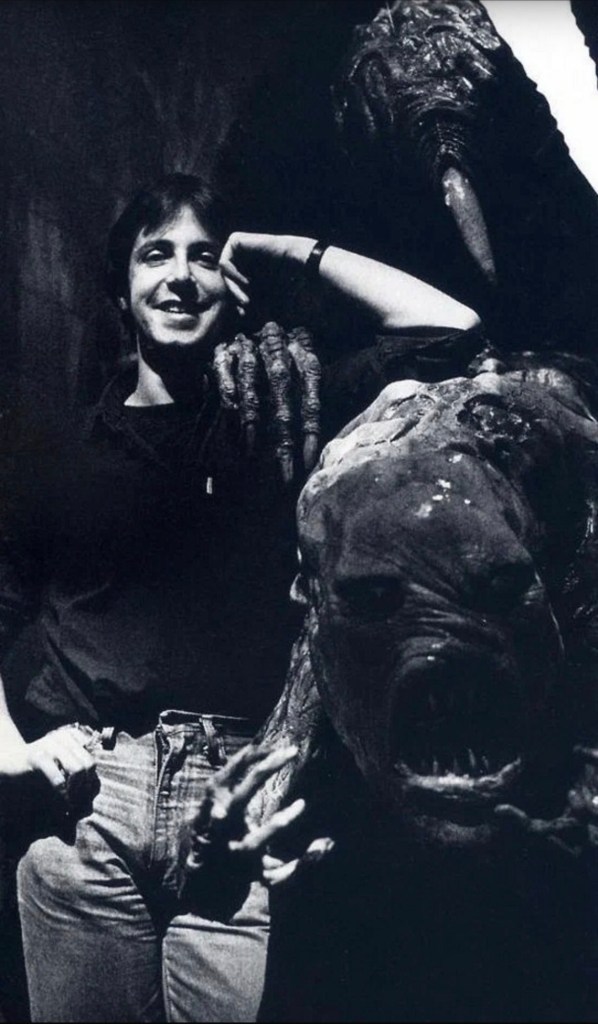
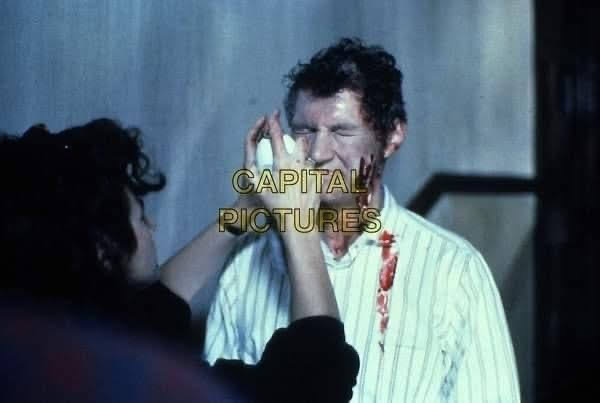
- The scene where Frank is being spun upside down with blood pouring all over him was actually a camera test that they did before production even began. After, Sean Chapman couldn’t help but vomit after all that spinning, but the footage of his torture was put in the final cut of the film.
- Because the budget didn’t allow for elaborate sets, a real house in London had to be used for the Cotton residence. Only the attic was recreated and shot on a sound stage for the FX shots. Ashley Laurence stated that the house was for sale because someone committed suicide in the garage via carbon dioxide poisoning. Clive Barker said that shooting in an actual house forced him to get creative with his camera shots. Because the house was pretty small, there was often only room for 1 camera, and that’s why many of the shots are from only 1 angle.
- Skinless Frank was played by Oliver Smith, who was thin enough to appear quite normal in size while wearing the elaborate makeup appliances. Smith was a chainsmoker and he would often smoke cigarettes while waiting for scenes to be set up. Clive Barker saw it and liked it, so he decided to include shots of Skinless Frank smoking in the film.
- Halfway through filming, the producers wanted to set the film in America instead of London, so Bob Sessions was brought in to dub all of Frank and Skinless Frank’s dialogue.
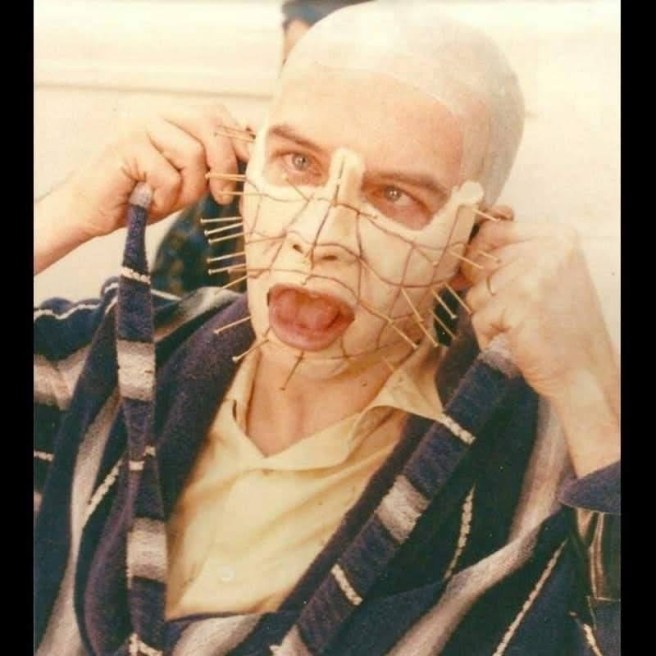
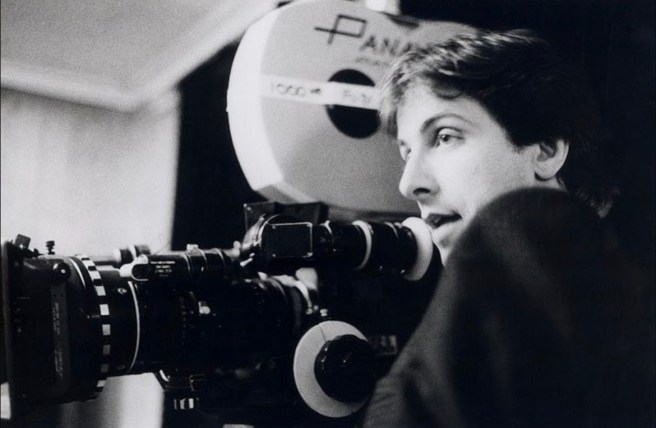
- The Female Cenobite’s line, “Perhaps we prefer you” was one of Butterball Cenobite’s line that had to be given out due to Simon Bamford’s inability to talk in the costume.
- Clive Barker adapted the film from his novella himself, and he made quite a few changes. Larry was actually named Rory in the book, and Kirsty was a close family friend, not Larry’s daughter. They changed her to be Larry’s daughter to create some incestuous undertones. Also in the book, Butterball was the lead Cenobite, not Hell Priest. Plus, Hell Priest wasn’t confirmed to be male or female, but the novella hinted at more feminine characteristics. Lastly, the final scene with the derelict (Frank Baker) was made just for the movie, and wasn’t in the novella.
- The look of the Female Cenobite was inspired by the scarification and piercings found in National Geographic articles. The makeup took 3 hours to apply. It caused great discomfort for Grace Kirby and it prevented her from sitting down. This could be one of the main reasons she decided not to return for the sequel.
- When Doug Bradley asked Clive Barker how he should play the Hell Priest, Barker told him “to think of him as a cross between an administrator and a surgeon who’s responsible for running a hospital where there are no wards, only operating theaters, as well as being the man who wields the knife, he’s the man who has to keep the timetable going”.
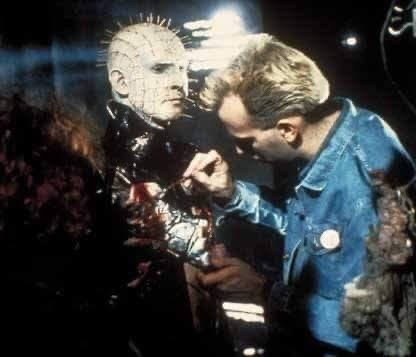
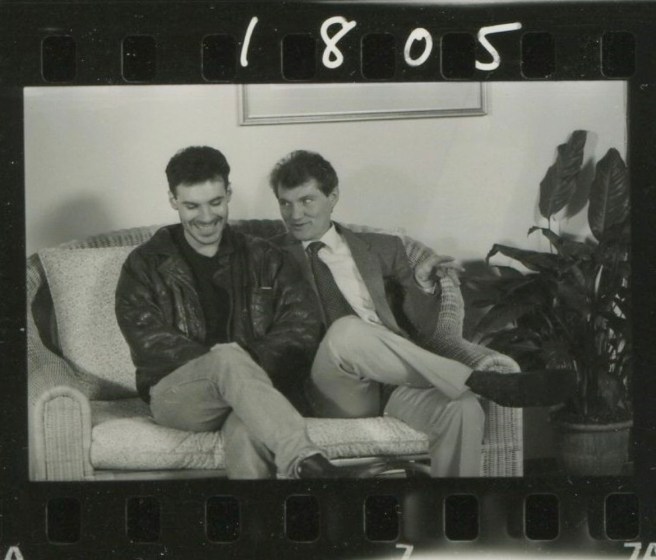
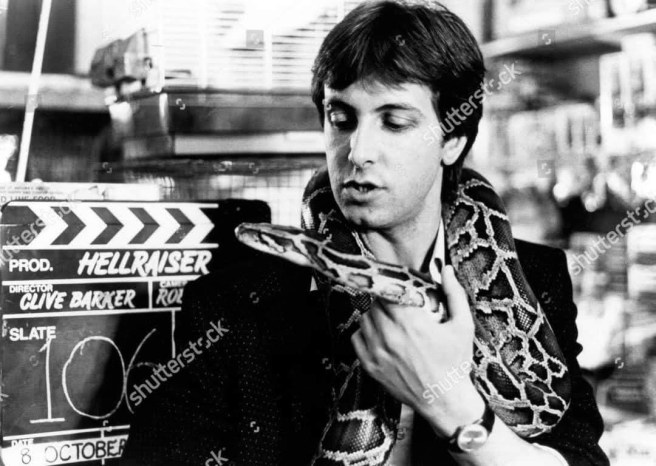
- Simon Bamford met Clive Barker through a mutual friend who was doing prop work for Barker’s plays. Bamford became friends with Barker and joined his theater company. After the company disbanded, Bamford contacted him and asked him if he was doing anything and Barker invited him to be a part of this film.
- For the costume for Butterball, Simon Bamford wore a fatsuit and a foam latex mask that made it difficult for him to see. His eyesight in the costume was so bad, someone had to lead him around by hand. Also, it took about 2 or 3 makeup assistants to pull his enormous form-fitting mask down over his head, and he couldn’t breathe properly for a full minute while they did that.
- At the wrap party, Doug Bradley was almost refused entry because nobody recognized him without his Hell Priest makeup on.
- To make the more disgusting parts more realistic, Ashley Laurence wore the same T-shirt throughout the shoot for continuity purposes. It, of course, became more filthy and sweaty over time, but she didn’t mind, as it made her battle against the demons from Hell look more believable.
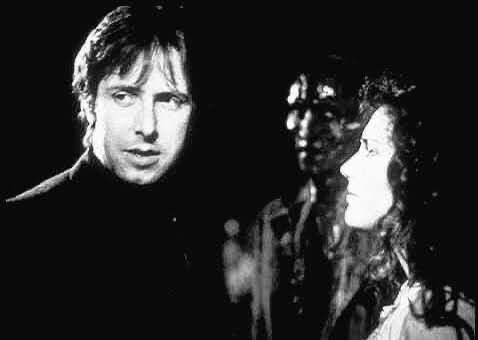
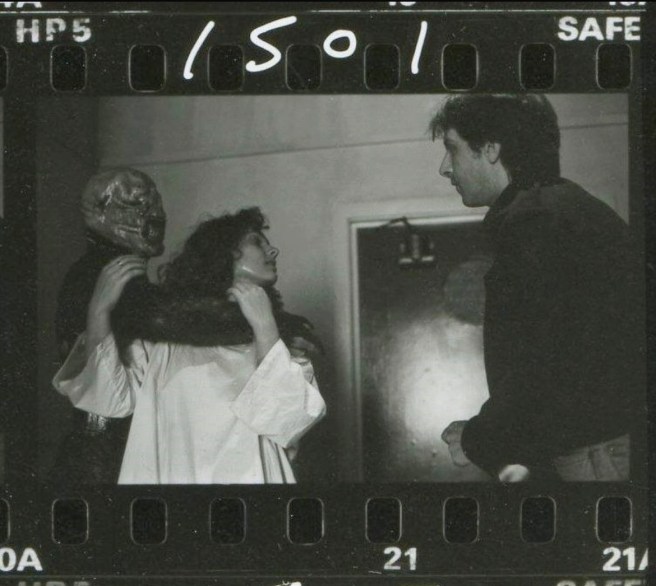
- The shot of Larry’s blood seeping through the floor was done with a simple reverse shot of a red liquid being pumped through rigged nail holes in the floorboard.
- The crew members admitted that the backbone of the special effects was, in fact, lube and condoms. Given the erotic nature of the film, using those materials was actually quite fitting. The crew sought out condoms because they were made out of the latex material they needed. They were mortified whenever they’d have to make a run to a shop to load up on what surely looked like a king’s ransom of orgy supplies.
- Lance Henriksen was offered the role of Frank, but he turned it down over the fear that he would have to appear in a series of sequels if the film was successful. He actually later appeared in one of the sequels, Hellraiser: Hellworld.
- Doug Bradley’s voice was originally going to be dubbed over by an American actor, like some of the other cast members. However, the producers reconsidered this when they actually saw him perform.
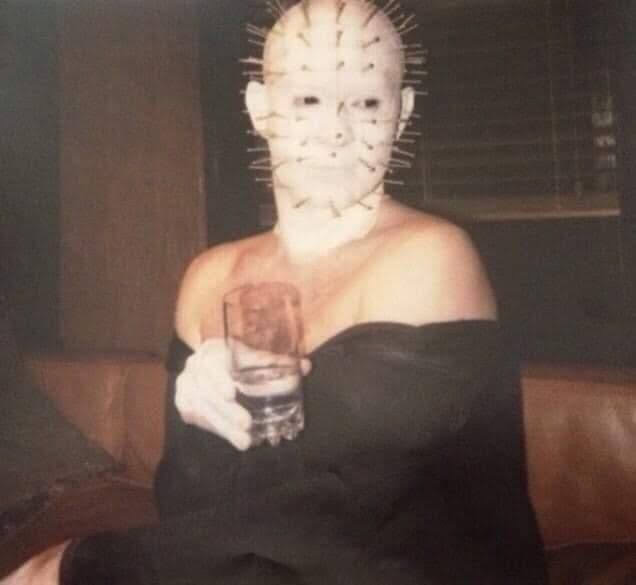
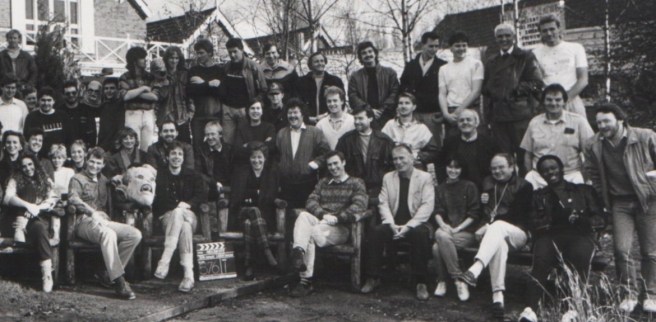
- Nicholas Vince lived near Clive Barker, and because liked his work, Barker gave him the role of the Chatterer Cenobite. The makeup for the Chatterer actually took less time to apply than the others.
- To achieve the look where Hell Priest rose above Kirsty, Doug Bradley stood on the end of a teeterboard, and the film’s first assistant director, Selwyn Roberts counter-balanced the other end, slowly rising Bradley above Ashley Laurence.
- The Lament Configuration was conceived and designed by Simon Sayce.
- When Doug Bradley was in the Hell Priest makeup for the very first time, he got into character by spending a few moments alone in his room and just looking at himself in the mirror.
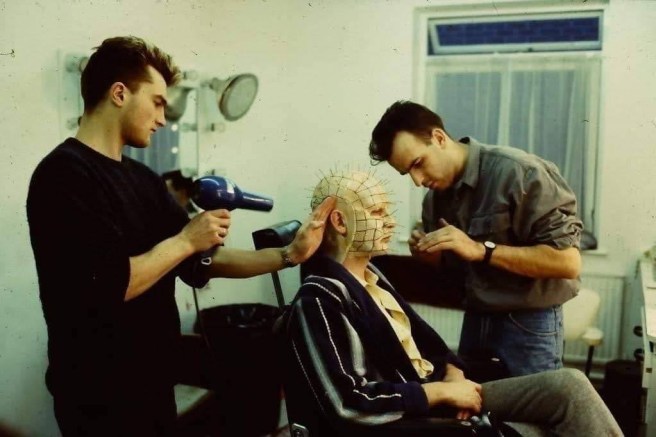
- Ashley Laurence’s participation in this franchise was pure coincidence. She was a young drama student who enrolled in a teen acting workshop simply because she had a crush on one of the other participants. One of her classmates happened to be an intern at New World Pictures. They’re the one who recommended Laurence to Clive Barker. The studio wanted a more famous name to play Kirsty, but Barker pushed for her to be cast.
- Jennifer Tilly auditioned for the part of Kirsty Cotton.
- Grace Kirby is actually Clive Barker’s cousin.
- For the photographs of Frank having sex with a prostitute, a real prostitute was hired. They posed for the photos in a tiny room that various crew members were trying to peek into.
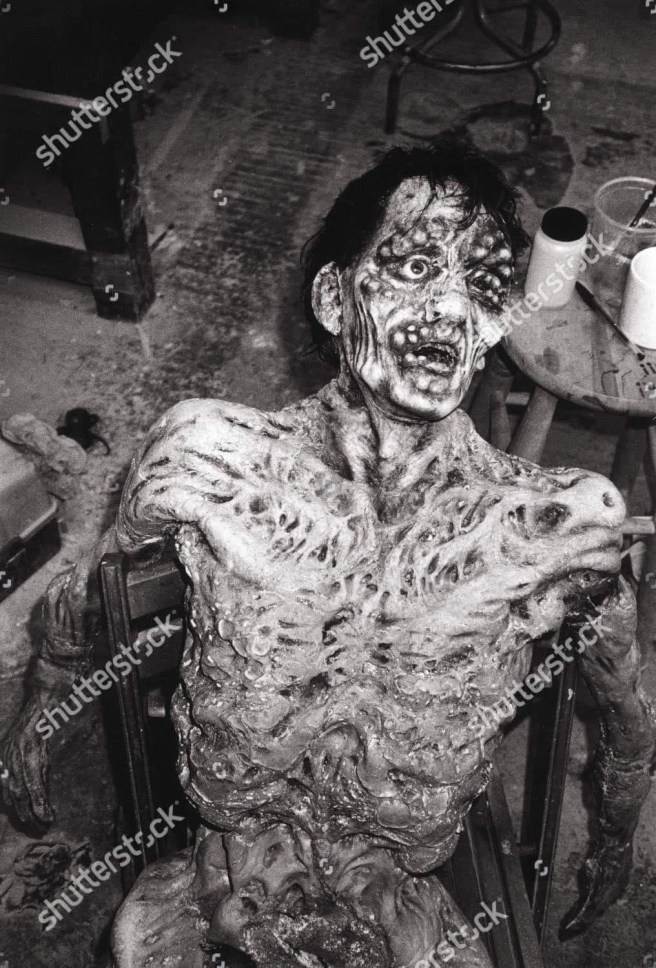
- The big creature, known as the Engineer, who chases Kirsty through the corridor, was in the novella but not in original script. It was added to the film after the producers felt that more jump scares were needed. The Engineer was the true, non-human overseer of Hell’s labyrinth and the creator of the Cenobites’ torture weapons and modifications.
- The Asian man who sells the box is simply known as The Box Seller or The Dealer. The man who played him remains uncredited and officially unknown. Due to the sound of his voice, many fans speculated that he was played by legendary Asian actor, James Hong. It was never confirmed or denied, so his identity remains a mystery.
- 1999’s The Mummy shared a major similarity with this film, where a character starts out skeletal and completely regenerates by sucking victims dry(ish).
- When we first see Larry, his eyes are blue. After Frank kills him and wears his skin, you can see his eyes are dark brown. The skin suit also stretches and Larry is clearly shown to have died by blunt force trauma to the head, as his scalp and hair are bloody.